Future Private Capital CFO 2026
How CFOs are becoming the architects of operational trust
Download this resource
All fields marked with * are required.
NOTICE – By accessing this resource you consent to CSC sending you information about our services. Each communication will include a link to opt out of receiving such communications and you have the right to unsubscribe at any time.
What is Future Private Capital CFO 2026?
Future Private Capital CFO 2026 is CSC research on how the private capital CFO role is expanding as firms manage fund-level liquidity, limited partner (LP) disclosure, fund administration, outsourcing, cybersecurity, and AI governance.
The report is based on two surveys of 512 private capital respondents: 307 general partner (GP) executives and investment professionals and 205 institutional LP professionals.
Core finding: CFOs are becoming the architects of operational trust. Their role is to make finance, liquidity, reporting, data, provider oversight, cybersecurity, and AI-enabled processes work as one reliable system.
Top private capital CFO trends and takeaways for 2026
-
Fund-level liquidity is now operating infrastructure.
GPs use 2.4 liquidity and financing tools on average, so CFOs are managing liquidity stacks rather than isolated financing decisions. -
Data fragmentation is still a finance drag.
Eighty-eight percent of GPs spend 11 to 50% of finance and operations time validating, reconciling, recalculating, or recreating administrator outputs. -
Data integration is a control issue.
Disconnected facility data can affect cash forecasting, fund accounting, investor allocations, performance attribution, covenant reporting, audit evidence, and LP disclosures. -
Outsourcing and co-sourcing are strategic operating model decisions.
Seventy percent of GPs are targeting either primarily outsourced operations or a single strategic co-sourcing partner. -
Cybersecurity and AI governance are now part of CFO control architecture.
As finance operations become more automated and co-sourced, LPs expect visible controls, validation, ownership, human review, and accountability.
Why the private capital CFO role is changing
Private capital operating models are more interconnected across the organization. Liquidity decisions can involve CFOs, treasury teams, investment teams, administrators, lenders, legal counsel, investor relations, and external providers. LPs want clearer evidence of how those decisions affect cost, performance, governance, risk, and reporting.
This gives CFOs a wider mandate to turn complexity into credible information, repeatable controls, and scalable operating processes.

Key findings from the report
-
The CFO is increasingly the integration point across diverse functions. 37% of GPs say the CFO or finance team has primary responsibility for fund-level liquidity and fund finance, compared with 29% who say a dedicated treasury or fund finance team leads it and 22% who say the investment or deal team leads it.
-
GPs use 2.4 liquidity and financing tools on average, including continuation vehicles or GP-led secondaries, hybrid facilities, NAV facilities, and subscription credit facilities.
-
90% of LPs say a GP’s use of fund-level leverage and liquidity tools increases their likelihood to commit or re-up, assuming disclosure is adequate.
-
63% of GPs cite integrating facility data with fund accounting and investor reporting as a major operational challenge.
-
88% of GPs spend 11 to 50% of finance and operations time checking administrator outputs.
-
74% of LPs identify IT systems and cybersecurity as important to operational due diligence.
-
59% of LPs say a documented AI and data governance framework shared as part of due diligence would increase their comfort with GP use of AI in finance and operations.

Expert insight
Outsourcing changes the nature of oversight. It transfers the work, but not the accountability. Decision risk, strategy risk, and ongoing oversight remain with the GP.
Mandy Lam
Executive Director, Head of Fund Services North Asia, CSC

The practical solution is for the data to be pushed into a single golden source, such as a data lake, whether through a portal, SFTP, or other mechanism. Managers can then access information in a clear and consistent format for use in their reporting. Outcomes are clarity, accessibility, and consistency.
Chris Patton
Regional Head of Funds, UK, Channel Islands, Spain and UAE
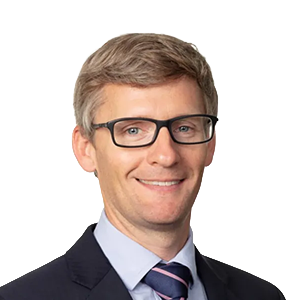
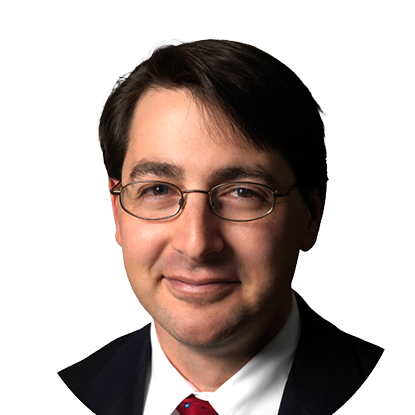
Private capital spans many different asset classes, and each requires an operating model tailored to the investment strategy. The key is to match the right vendors with the right product and the right operating model.
Marshall Saffer
Managing Director, Fund and Capital Markets Services, CSC
Questions answered in the report
-
How is the private capital CFO role expanding in 2026?
-
What fund-level leverage disclosures do LPs expect from GPs?
-
Why is facility data integration such a challenge for private capital firms?
-
How are outsourcing and co-sourcing changing private markets operations?
-
Why do cybersecurity and AI governance now matter in operational due diligence?

Related services
Frequently asked questions about private capital CFO trends
Future Private Capital CFO 2026 is CSC research on how the private capital CFO role is changing as firms manage greater demands around liquidity, LP disclosure, outsourcing, cybersecurity, and AI governance.
CSC’s Future Private Capital CFO 2026 is based on two surveys of 512 private capital respondents: 307 GP executives and investment professionals and 205 institutional LP professionals across Asia Pacific, the U.K. and EU, North America, Central and South America, Africa, and the Middle East.
This report is for private capital CFOs, COOs, treasury teams, fund administration leaders, investor relations teams, operations leaders, and senior decision-makers assessing liquidity strategy, reporting infrastructure, outsourcing, cybersecurity, and AI governance.
Marshall Saffer is managing director, Fund and Capital Markets Services at CSC, with 25 years’ experience supporting leading PE funds, hedge funds, and traditional asset managers. He previously served as managing director and global head of funds services at Intertrust Group, a CSC Company, and has worked with MIK Fund Solutions, DataArt, and Hazeltree. Marshall holds a bachelor’s degree in psychology from Connecticut College.
Chris Patton is Regional Head of Funds for the UK, Channel Islands, Spain, and UAE at CSC. Based in Jersey, he has more than two decades of experience across fund operations, private equity, real estate, and financial services. Before joining CSC, Chris held senior roles at Intertrust, Saltgate, State Street, and Deloitte. He is a Chartered Tax Adviser, holds the ICA International Diploma in Governance, Risk and Compliance, and earned a BSc (Hons) in Applied Microbiology from the University of the West of England.
Mandy Lam is executive director, head of Fund Services North Asia at CSC, with more than 25 years’ experience across fund services, accounting, valuation, transfer agency, operations, and audit. She has held senior roles at Intertrust Group, MaplesFS, Schroders, Maples Fund Services, HSBC, Alter Domus, and Wong and Lam CPA. Mandy holds a master’s degree in professional accounting from The Hong Kong Polytechnic University and is a fellow of HKICPA and ICAEW.
The role is expanding because liquidity tools, investor reporting, third-party oversight, cyber controls, and AI-enabled processes now cut across multiple functions and require stronger coordination.
Operational trust is the confidence that a private capital firm can produce accurate, timely, secure, explainable, and decision-ready information at scale.
For CFOs, that means showing how liquidity tools affect performance, how data moves into reporting, how third-party providers are overseen, how payment and investor processes are protected, and how AI-enabled workflows are governed without weakening accountability.
Liquidity and financing tools are becoming mainstream, which means CFOs need to coordinate governance, reporting, performance attribution, and LP disclosure across multiple facilities and providers.
LPs increasingly view cybersecurity and AI governance as part of operational due diligence. CFOs need evidence of controls, data security, validation, ownership, and accountability.